Tour des Combins
The relatively new Tour des Combins (TDC) is a spectacular trek in the Swiss and Italian Alps. In fact, it is only one narrow mountain ridge away from the famous Tour du Mont Blanc (TMB) which makes it a great trek for those who have completed the TMB and want a new challenge. And it is a perfect option for those who cannot get space on the TMB and still want to take on an Alpine trek. The TDC is 102km long with 6,100m of ascent/descent. The highest point is Col des Otanes (2875m).

What is so special about the Tour des Combins?
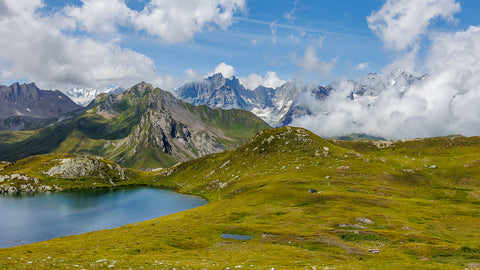
Just like its more famous contemporary, the TDC circumnavigates a spectacular alpine massif: in this case, the Grand Combins Massif (which is immediately adjacent to the Mont Blanc Massif). Clear paths and tracks lead you along spectacular ridges, across high mountain passes and through spectacular valleys. Day by day, the terrain changes and surprising new landscapes are displayed. There are jagged snow-capped peaks seemingly everywhere, shimmering alpine lakes of turquoise and blue, flower-filled pastures of the deepest green and exhilarating suspension bridges over deep chasms. And if that was not enough, the path traverses the moraine of the incredible Corbassière Glacier which, at 9.8km long, is one of the longest in Europe: you will find yourself as close to a glacier as you can get without actually stepping onto it. Like the Mont Blanc Massif, the GC Massif spans international frontiers and the trek passes through both Switzerland and Italy: the shifts in culture, language and food are highlights of the trek.
How long does the Tour des Combins take?
Most people walk the TDC in 6-7 days. However, fit and experienced hikers could finish it faster. Others prefer to walk more slowly, allowing 8 or 9 days to soak up all the delights on offer. Our guidebook sets out 10 different itineraries of 6, 7, 8 and 9 days. It really is up to you and your fitness level.

How hard is the Tour des Combins
The TDC is a multi-day trek with significant distances to travel, and metres to climb, each day. Accordingly, a reasonable level of fitness is required. However, it is fair to say that it is far from the most difficult trek in the Alps and it is therefore an excellent option for those new to trekking. The overall distance is short compared to some other Alpine treks. And unlike some other treks, once you are ‘up’ you stay ‘up’: the TDC rarely dips below 1600m.
The sensible spacing of the mountain huts (‘rifugi’) helps too. And, with a few exceptions, the TDC is well-served by good paths and tracks: there are a few sections which are more challenging but they are relatively short. Furthermore, if you walk the conventional itinerary, the most difficult sections of the trek are undertaken towards the middle when you are ‘trail-hardened’. In summary, if you are reasonably fit then this trek should be within your capabilities.
Many who have completed the TMB (the most famous Alpine trek) look to the TDC for their next trekking experience. Accordingly, it can be useful to compare these two treks. The TDC is much shorter (102km compared to 174km) and has less climbing (6,100m compared to 9,700m). Accordingly, it is usually completed more quickly than the TMB (6-7 days compared to 10-12 days). On paper therefore the TDC is the easier of the two treks. However, the bare statistics do not tell the full story and there is an additional factor which increases the difficulty of the TDC slightly: the TDC is more remote.
One stop info source for TDC planning
Don't waste precious hours trawling the internet
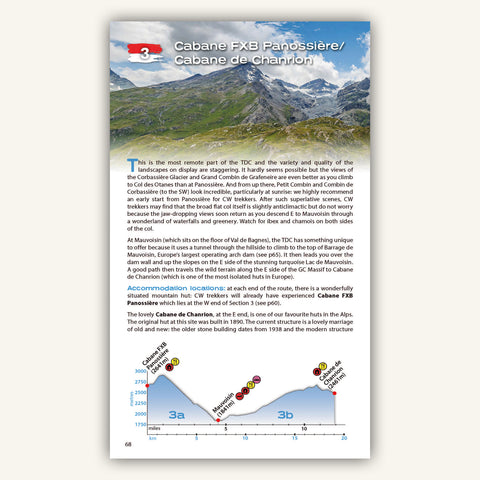


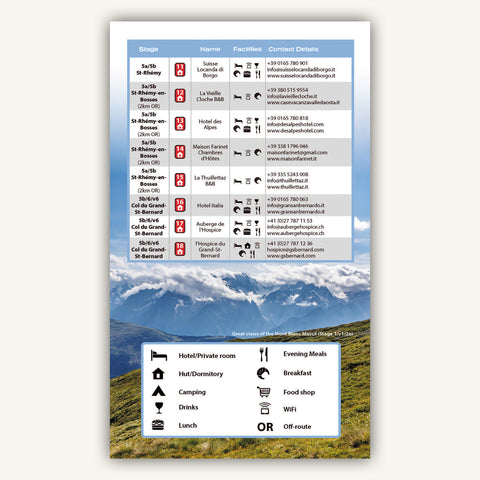
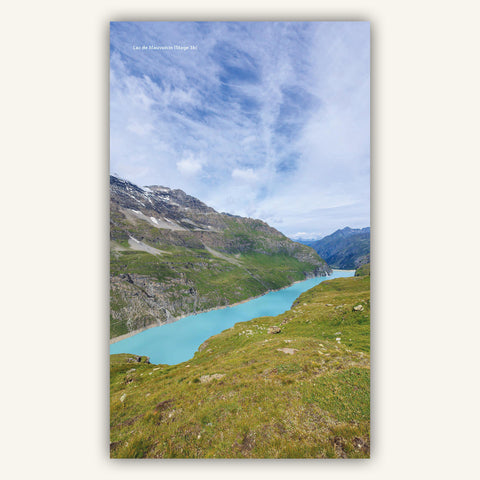
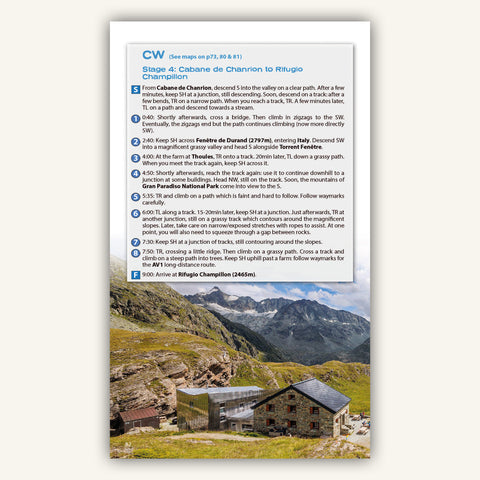
Trekking the Tour des Combins: Two-way Guide
What are the trails like?
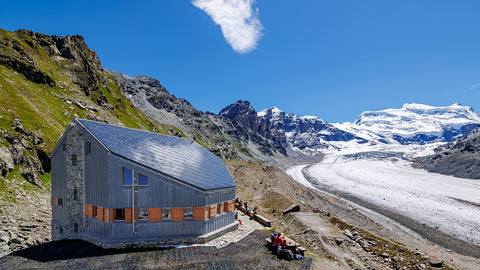
Sometimes paths are steep, rocky and challenging underfoot. Occasionally, you might have to climb up or down short sections of boulders but fortunately, you will not require any technical scrambling/climbing skills. On occasion, the route is exposed with large drops.
For the most part, the paths/tracks are clear, well-marked and simple to follow in good conditions: only occasionally is the route less obvious and more difficult to follow. Consequently, most people have no major difficulties staying on course.
Should I go on an guided trip or walk independently?
A frequently asked question is whether to walk independently or with an organised group. The answer is a personal one and depends upon your own particular circumstances and requirements. For many, the decision to organise the trek themselves, and to walk independently, can be almost life-changing, opening the door for other challenges in the future. There is much satisfaction to be gained from planning and navigating a trek yourself and the sense of achievement on completion is to be savoured. However, the independent trekker usually carries a full pack and is responsible for all daily decisions such as pacing, which way to go at junctions, when to stock up with food and water, and choice of route in bad weather. For some, this will be too great a burden on top of the physical effort required simply to walk the route. For those walkers, a guided group is a great solution: the tour company typically organises food and accommodation and the guide makes all the decisions, enabling the walker to concentrate on the walking. There are several tour companies operating guided trips on the TDC but you should check whether they cover the full official route or just some of the highlights.
Self-guided tours are much more popular and are a sensible middle-ground. The tour company books all the accommodation and provides advice and information on walking the route. However, you will walk the trail without a guide. Normally, breakfast and evening meals will be provided and you can request packed lunches.
The best map for planning and hiking the Combins
The entire TDC and variants on one sheet
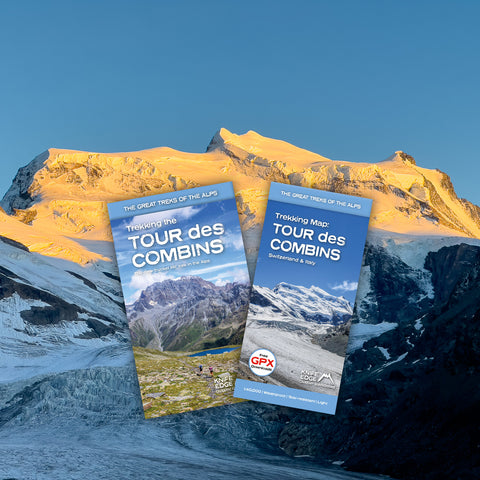
Tour des Combins Trekking Map: English/French/German

When to go?
Mid-June to late-September is the normal period for walking the TDC. Before and after these dates, some accommodation closes.
Where do you stay?
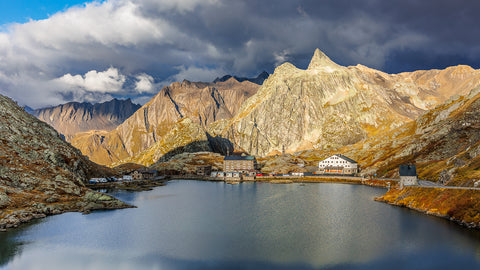
Due to the remote nature of the terrain, the route of the TDC only passes through a handful of tiny settlements: Bourg-St-Pierre, Mauvoisin, St-Rhémy and the Col du Grand-St-Bernard. There is accommodation in each of these places. Away from these settlements, accommodation along the trail is in five mountain huts in five different locations: they offer dormitory accommodation, meals and alcohol. The huts are situated in the heart of the mountains where they are normally accessible only to walkers. A stay in a mountain hut can be one of the highlights of a mountain adventure such as the TDC. They are basic but they are reasonably good value.
Do I need to book in advance?
In July and August, forward booking is wise: these days, most people have their entire trip booked before they depart. Even outside of July and August, it is wise to book ahead, particularly at weekends and for places where there is only one place to stay. In June and September, fewer people walk the route so there is less demand for accommodation: you can sometimes still get away with only booking a day or two in advance but you might be unlucky and end up without anywhere to stay: for example, you can get caught out if a large group has booked up a lot of beds.
Travelling Light
The lighter your pack is the more you will enjoy the trek. Every oz counts. Standard advice is to bring 'only what is absolutely necessary' but what does that actually mean? We prefer the 'Will I die, or endure pain, without it?' test. For example, that hair dryer. Yes we know it is a light travel one but you will have to carry it up more than a Mount Everest. Will you die without it? No. You may have to endure rubbish hair for a few days though. Believe us that halfway up the first mountain pass, you will be considering jettisoning it. Do you really need that make-up? That full 500ml bottle of shampoo? That laptop? It is fair to say that the more treks you do, the lighter your pack becomes. Experience helps you sift out the things that you do not really need. Be ruthless about what you take.

Is wild camping permitted?
The rules on wild camping (bivouacking) on the TDC are complicated. The trek enters two countries and different rules apply in each. The short answer is that wild camping is permitted in some places but not in others. The long answer would take many pages and this is dealt with in full in our guidebook.
What are the best maps for the Tour des Combins?
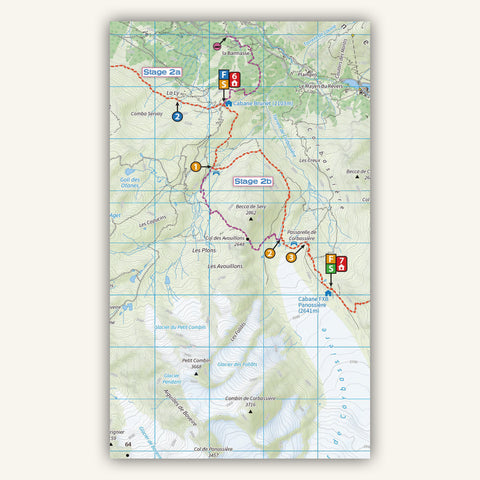
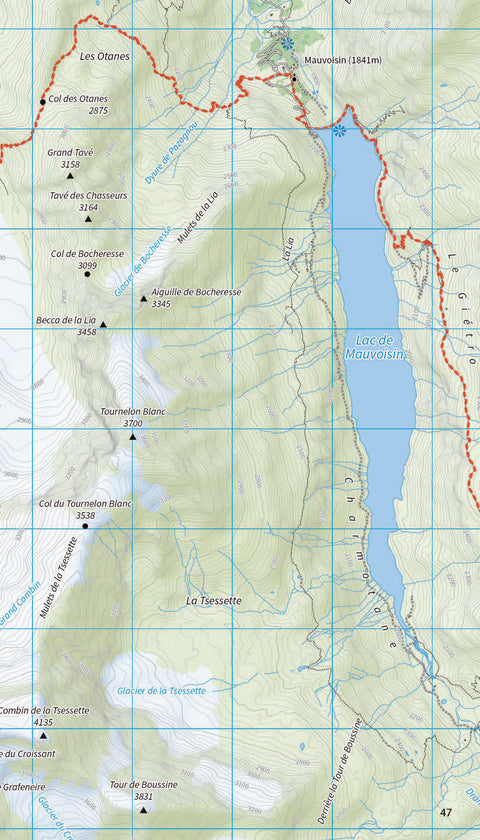
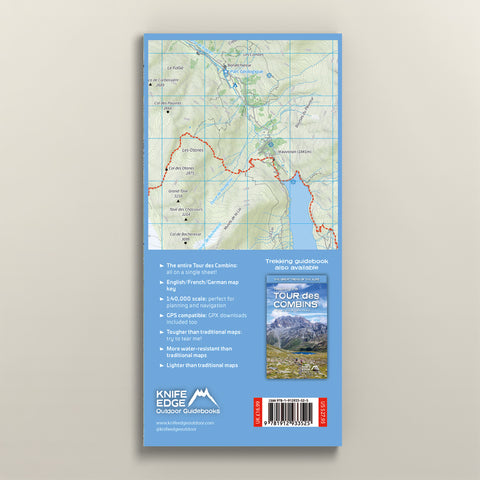
We were not happy with the maps previously available so we made our own bespoke sheet map especially for TDC trekkers. All accommodation, huts and other services are marked on the map. There is nothing else like it available and it is the best map in existence for planning and hiking the Tour des Combins.
Combins 20% Bundle
Buy both Guidebook and Map to save 20%Why are our guidebooks better?

What you really need to know is how to plan a trek: itineraries, accommodation, food, water, etc. However, for our competitors, trek planning is a mere afterthought and they fill their books with step by step directions for navigating the trail. Yet these days, most people navigate trails using GPX tracks and over-complicated directions are unnecessary. Accordingly, we focus in much greater detail on trek planning so that you can snag the best accommodation bookings. We still provide directions but they are more concise and user-friendly.

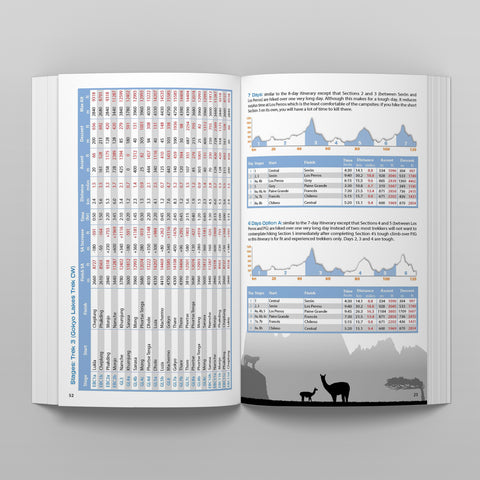
When planning a trek, the first step is to design an itinerary that matches your ability and experience. There is little point in booking trail accommodation until this is finalised. Our itinerary planners are far more comprehensive than anybody else's. We include up to 20 different itineraries and provide daily statitics for each of them. This enables you to quickly choose one that suits, saving you hours of work. You will not find these in any other books or on the web.

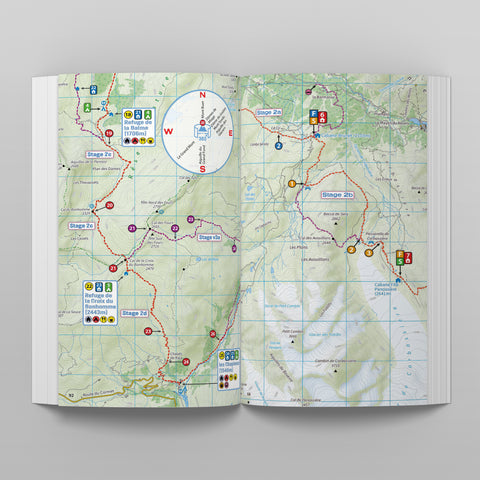
Unlike other books which contain useless sketch maps, ours contain real maps. In most cases, we produce our own mapping which is more up to date than many other traditional maps. Because we make our own, we can mark on them all accommodation, food and shops along the trail. This helps you to understand exactly where you can stay and where you will resupply. Other books do not provide this level of detail.

Our designs are more modern and exciting. Our professionally captured images help you visualise what you will see along the trail. There is nothing wrong with salivating over spectaular scenes even though your trek might be a year away!

Other Incredible Treks
Key info on the world's best trails
The Great Treks of the Alps
The ultimate planning guides for the best alpine treks